Alejandro H. Rodriguez-Giovo
You can scroll the shelf using ← and → keys
You can scroll the shelf using ← and → keys

Early in the afternoon on the 22nd November 1963, 60 years ago today, Major Warren Lewis suggested to his brother, C. S. Lewis, who was continually drowsing off in his armchair after lunch, that he might be more comfortable in his bed. C. S. Lewis had been in frail health for quite some time; indeed, his physical – though not mental (that very morning, Lewis had written four letters in his own hand) – decline could be traced back to the premature death of his wife Joy in 1960. At 4 p.m., Major Lewis took his brother a cup of tea, and found him cheerful but still drowsy, and somewhat slurred in his speech. At 5:30 p.m. there was a crash in the bedroom; Major Lewis rushed in to find his brother unconscious at the foot of his bed. He ceased breathing three or four minutes later.
Almost simultaneously, a couple of bullets in Dallas put a dramatic end to the life of U.S. president John F. Kennedy. The repercussion of that event relegated to quasi-invisibility in the world’s media the demise of C. S. Lewis – which, given that he was 64, can also be regarded as untimely, bearing in mind that he was at the height of his intellectual powers. Kennedy’s assassination also obliterated the news of Aldous Huxley’s death that same day.

It’s up to U.S. citizens to assess the value of Kennedy’s presidency for their country. As a citizen of the world, it seems to me that mankind owes him little gratitude: his lack of equanimity and equitability during the Cuban Missile Crisis nearly precipitated us all into a cataclysmic nuclear war, and he decisively increased the United States’ military involvement in Vietnam, with appalling long-term consequences for the civilian population not only of that country, but also of Laos and Cambodia. The moral standards of his personal life don’t much interest me, but I understand that they were also far from exemplary.
In contrast, God (or nature and nurture, if your perspective is strictly secular) through C. S. Lewis gifted humanity with one of the most lucid, inspiring and morally impregnable philosophical minds of the 20th Century. It may surprise you to hear this, since the academic establishment from the outset systematically denied Lewis any credentials in the domain of Philosophy; at best, you will find him extolled as a great literary scholar and critic, or acknowledged as a talented essayist and novelist, but frequently he is classified as no more than a writer of classic children’s stories (which were for him only a hobby, late in his life) or – most damning of all – as a “Christian apologist.”
Apart from his Christianity (which Lewis had in common with, inter alia, Augustine, Aquinas, Erasmus, Descartes, Pascal and Kierkegaard, but which from the 20th Century onwards became a crippling handicap in the eyes of the intelligentsia), what disqualifies Lewis utterly from serious consideration as a philosopher in academic circles is, of course, the clarity, panache and ethical integrity of his writing: it’s immediately comprehensible and entertaining, it’s intuitively sensible and it requires no scholarly interpretation by professionals. By making profound and original thinking readily accessible to unspecialized readers, Lewis unforgivably deprives professors of Philosophy of their livelihood. In contrast (to focus on just one example), the onanistic ontological lucubrations of Heidegger, couched in tortured, turgid prose riddled with narcissistic neologisms, are revered, as their meaning is accessible only to cognoscenti who derive their status (and income) from mediating his portentous gobbledygook. Heidegger cynically made a virtue out of verbiage and incomprehensibility: he’s on record as having written that it’s suicidal for philosophy to be understandable.

Heidegger with a Nazi Eagle insignia on his lapel
The fact that Heidegger was an anti-Semitic, Nazi scumbag for as long as he could get away with it adds to his glamour, for in the 20th Century (and what we’ve seen so far of the 21st) turpitude and sleaze in their personal lives are – in addition to writing poorly – major assets for philosophers. The latter are admired for the Nietzschean courage with which they break free from the constraints of petty bourgeois values (although, when it comes to the crunch, these frequently mocked bourgeois values turn out to be the only values, which nihilists don’t hesitate to invoke whenever they see themselves as victims of an injustice). Hence the 20th Century’s exaltation of the repulsive, perverted pornographer de Sade.
Lewis, on the other hand, is a scurrilous biographer’s nightmare. His life, though interesting enough, was eminently honourable. He was a person who spent little money on himself, even when his income (most of which he quietly earmarked for charities) peaked thanks to the royalties for his Narnia books. By inclination a bachelor (as many Oxford dons were at the time), he married an American poet (Joy Davidman) so that she would not be deported with her two young sons (only subsequently did he fall in love with her). He was kind, generous and loyal to his friends (J. R. R. Tolkien might not have pursued The Lord of the Rings without Lewis’ unceasing encouragement), and – with no secretarial assistance – was heroically patient, attentive and courteous towards his myriad correspondents and admirers (such was his fame that in 1947 he was featured on the cover of Time magazine). He modestly turned down all the honours (such as a C.B.E.) that successive British governments of different political persuasions wished to bestow on him.
The above-mentioned, salaciously-minded biographer (i.e. the archetypal 21st Century biographer) will make the best he can of Lewis’ curious, ambiguous relationship with Mrs. Moore, the divorced mother of a World War I comrade-in-arms who died in the conflict (Lewis, who as a Northern Irishman was exempted from conscription, nevertheless volunteered as a matter of principle and was badly wounded in combat). Having gallantly promised his friend that – should the latter get killed – he would look after her, he eventually moved in with Mrs. Moore (he had lost his own mother when he was 10 years old) – who, though more than 20 years older than him (he was 19), was not unattractive. The relationship between them may well have taken a romantic turn in its early stages (there is no concrete evidence one way or another, and Lewis never spoke or wrote about it), but what is certain is that in the longer term she became something of a substitute mother to him.

Lewis in 1917, shortly before joining the front lines in France during World War I
Although Mrs. Moore’s personality deteriorated with age, Lewis took care of her faithfully for over 30 years, until she died at the age of 78. This is the only skeleton that Lewis’ closet contains for biographical muck-rakers to examine under a microscope: it amounts to little more than bone dust, if that’s what it is – nothing sordid enough to enhance his philosophical reputation. Had Mrs. Moore’s insufferableness provoked him into smothering her with a pillow, and had he then celebrated her death by partying with catamites in a brothel, he would now be celebrated as a towering thinker.
Those interested in Lewis’ life have several biographies at their disposal. Three of the finest are C. S. Lewis (1976; revised 1994), by Roger Lancelyn Green and Walter Hooper (both of whom knew him well), C. S. Lewis: A Biography (1990), by the eminent biographer A. N. Wilson, and C. S. Lewis – A Life: Eccentric Genius, Reluctant Prophet (2013) by Alister McGrath, Professor of Theology at Oxford University and King’s College London.
But the details of Lewis’ existence are far less important and illuminating than his philosophical works. It makes good sense to prioritize the latter.
The Abolition of Man (1943) is a concise, erudite and witty gem, chilling in its compellingly reasoned implications: a 20th Century classic that becomes more urgently topical with each passing year. Miracles (1947; revised 1960) brilliantly challenges the unthinkingly reductionist, materialist assumptions of our times. The Problem of Pain (1940) and An Experiment in Criticism (1961) provide additional, in-depth examples of Lewis’ eloquent, ingenious and crystal-clear thought processes, which never fail to captivate even those readers whom they do not persuade. But most illuminatingly enjoyable of all are the multitude of essays, articles and lectures that have been republished in a range of collections and editions over the years, and all of which, in one form or another, remain available in print.
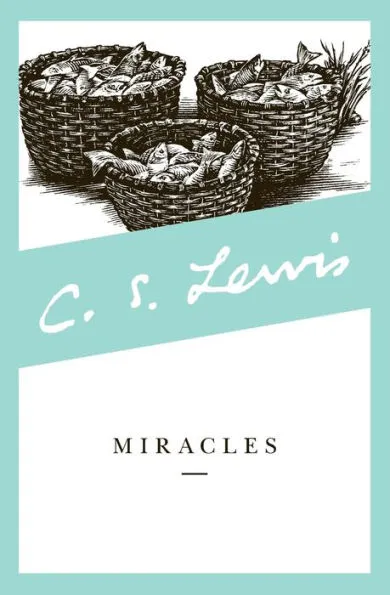
Lewis’ honesty and integrity as a philosopher (nowadays these are rare qualities indeed in this domain) are exemplified by the successive drafts of Miracles. The year after it was first published, aspects of it were challenged in an Oxford University Socratic Club debate by the analytical Thomist philosopher G. E. M. Anscombe, resulting in an epic crossing of intellectual swords that awed those present. Alas, no recording or transcript of the occasion survives. The debate’s outcome was seen by the audience as something of a draw, but Lewis humbly accepted the criticisms by Miss Anscombe that he regarded as justified, and he clarified his arguments accordingly in a revised edition of the book.

Needless to say, Lewis’ philosophical outlook is also embedded, even more enjoyably and entertainingly, in his fiction, prime examples of which are That Hideous Strength (1946) – an increasingly relevant dystopia that complements, and is worthy of rubbing shoulders with, Brave New World – and Till We Have Faces (1956), perhaps his most conceptually complex (notwithstanding its readability) and accomplished novel.
Such is the clarity and accessibility of Lewis’ writing that he does not obviously need to be expounded by interpretations, studies, dissertations and commentaries (though enough such works devoted to him have been published to fill several metres of shelves). Nevertheless, some scholars and intellectuals have greatly enriched our understanding and appreciation of Lewis by exploring more fully the implications and current relevance of his philosophy, and contextualizing it within wider patterns and traditions of Western thought. One such intellectual is Michael D. Aeschliman, whose The Restoration of Man: C. S. Lewis and the Continuing Case Against Scientism (1983; revised and expanded in 1998 and 2019; published in French as La restauration de l’homme, 2020) has been widely praised.

Intrinsically, Plato’s Dialogues could not be more didactically crystalline and engrossing. However, despite the best efforts of skilled and scholarly translators, they are unavoidably obscured for us today by the linguistic, historical, social, cultural, religious and psychological transitions that Europe and the world have undergone during the last two and a half millennia. Paradoxically, it is to some extent these obstacles to our straightforward understanding of Plato in 2023 that still endow him with an elevated status in 21st Century academic circles. Socrates would no doubt be dismissed as immaturely and naïvely simplistic, moralistic and pious if he were engaging with students of Philosophy in lecture halls today. Let’s hope that mankind doesn’t have to wait two and a half thousand years (assuming that it survives the self-inflicted perils of global warming or a nuclear holocaust, among others) before the sterling philosophical contributions of C. S. Lewis, finally made abstruse and enigmatic by the accumulated silt of centuries, are rated as highly as Heidegger.
 Alejandro H. Rodriguez-Giovo